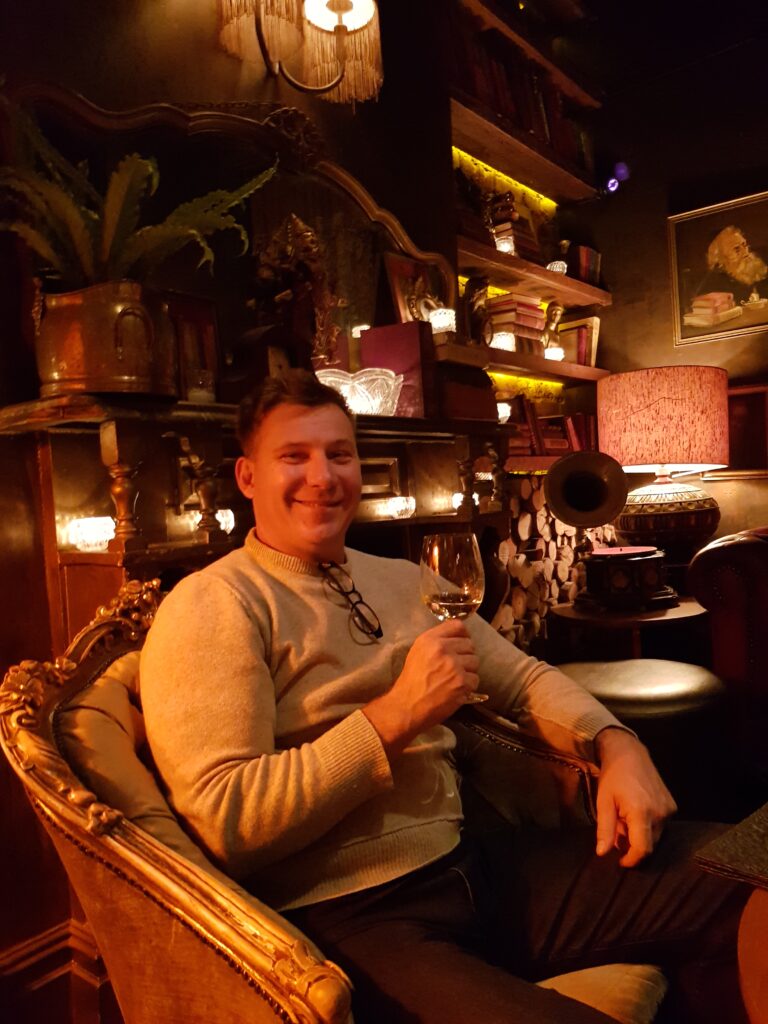

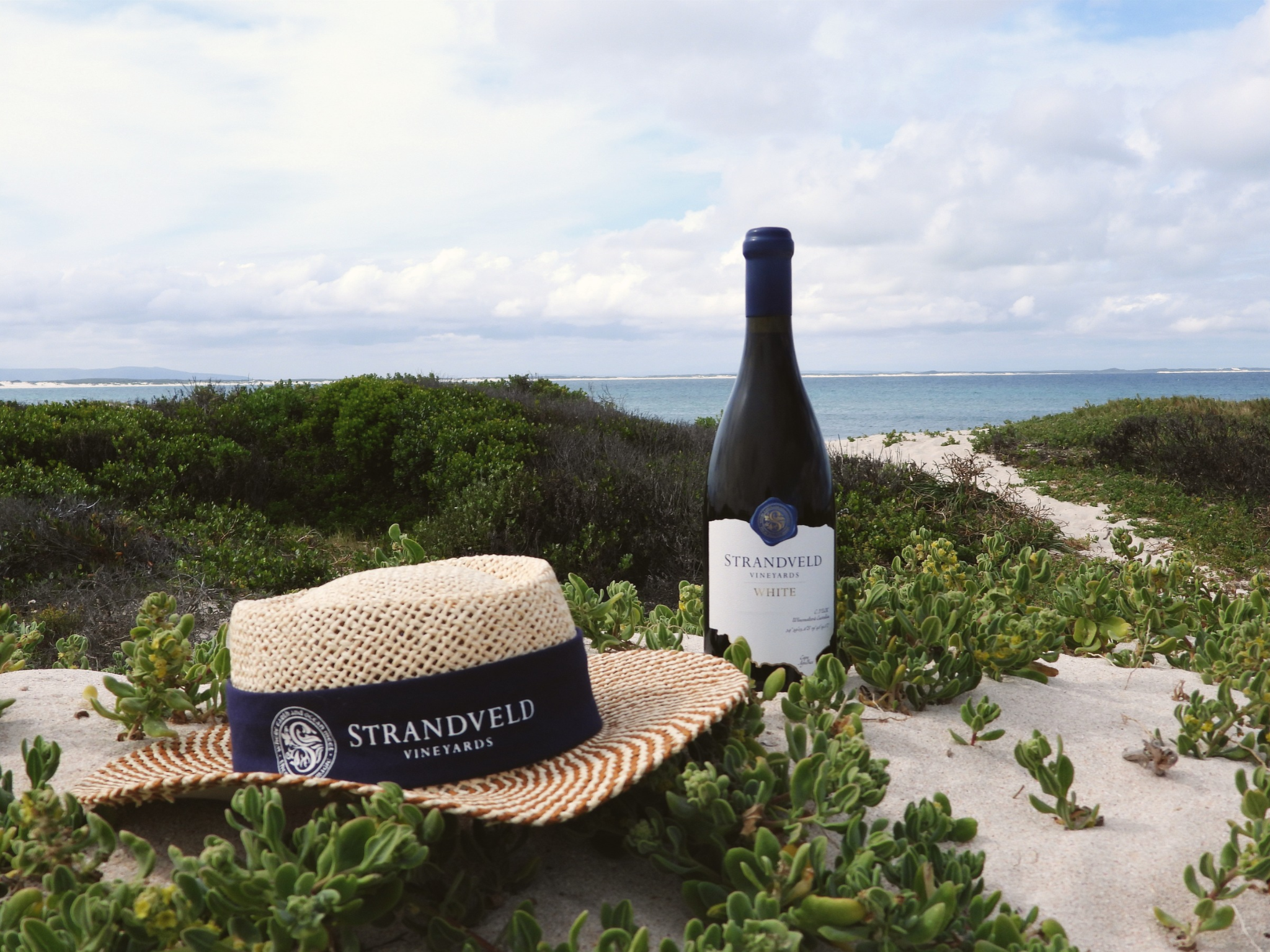
The stretch of coast around Cape Agulhas and Arniston is one of my favourite places to go on holiday. On one of those trips I took a detour to Strandveld Vineyards near Elim and spent some time in its tasting room. I enjoyed the visit, but what stayed with me most was how unlike the South African wine farms I usually visit it felt. I’m accustomed to vineyards with mountains behind them or hills rolling off into the distance. Strandveld is more open, more exposed and rather stark. I liked it all the more for that.
And, of course, there’s a certain pleasure in being able to say you’ve visited the southernmost winery in Africa. I’d have made the detour without that distinction, but I’m very happy to have it.
A wine farm shaped by the sea
Strandveld lies between Elim and Cape Agulhas, about nine kilometres from the sea. Its name comes from the coastal belt that runs around the southern tip of Africa. In 2001, a group of wine enthusiasts saw enough promise in an old sheep and wheat farm here to start planting vines. They had chosen a place where Atlantic winds, sea mist and cool temperatures were part of the bargain.
Those conditions help explain why Sauvignon Blanc is so at home here. The cool weather gives the grapes time to ripen slowly and retain their freshness. The wind is a less straightforward gift: a summer breeze helps dry the vines, but a gale during flowering is another matter. Then there’s the ground itself. Across the farm you’ll find shale, iron-rich gravel and even a patch of white quartzite where Strandveld grows Syrah. The farm also works with neighbouring landowners and communities to protect the wetlands and indigenous vegetation of the Agulhas Plain.
The tasting room is in the farm’s old stable block, with a veranda for days when the weather cooperates. If you have time for a tasting, I’d ask to try the Pofadderbos Sauvignon Blanc alongside the Strandveld White, if both are available. The Pofadderbos is fermented in stainless steel; the White finishes fermenting in French oak. It’s a good way to see how differently the same grape can be handled at one farm.
Strandveld White from vineyard to barrel
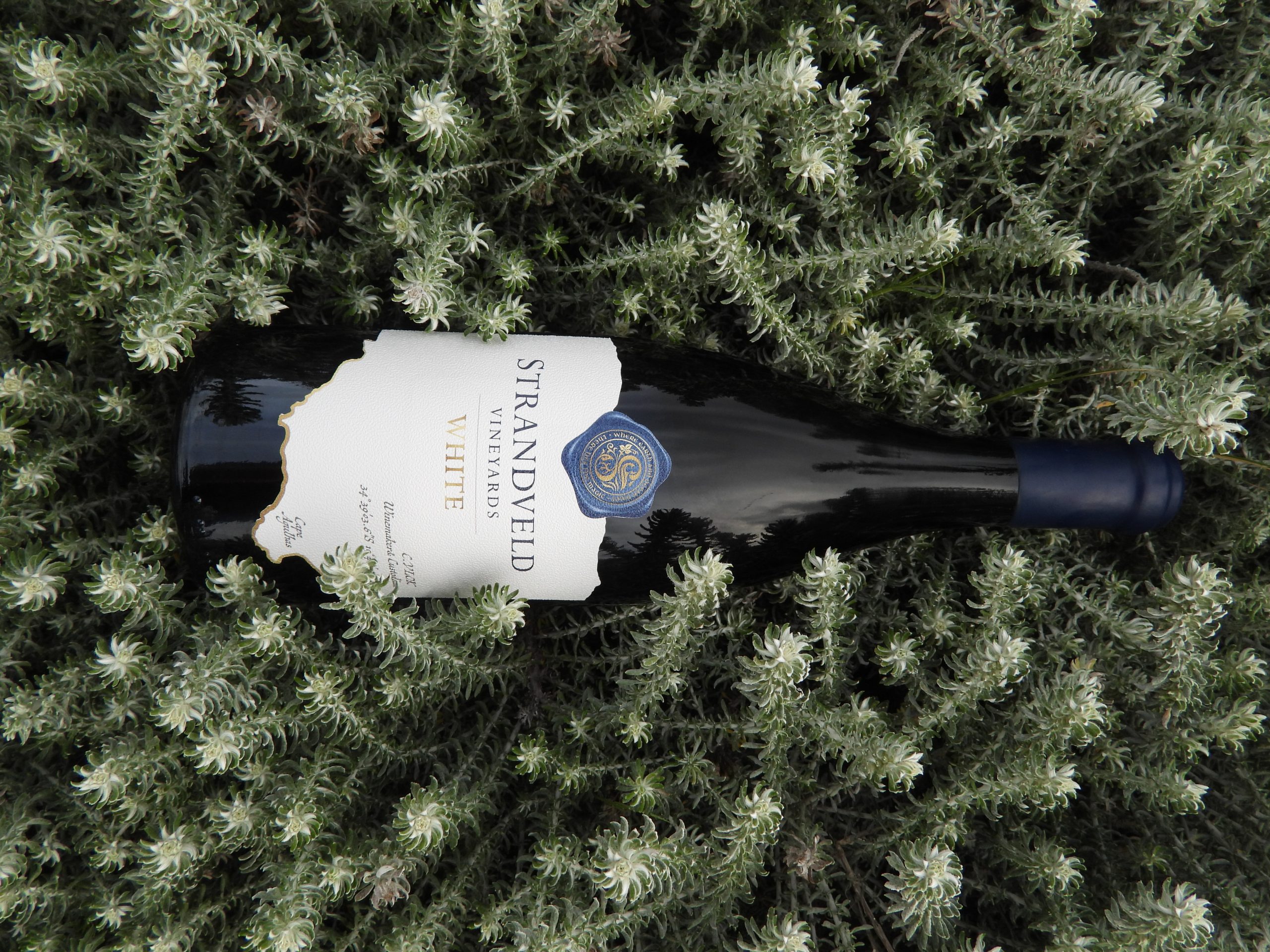
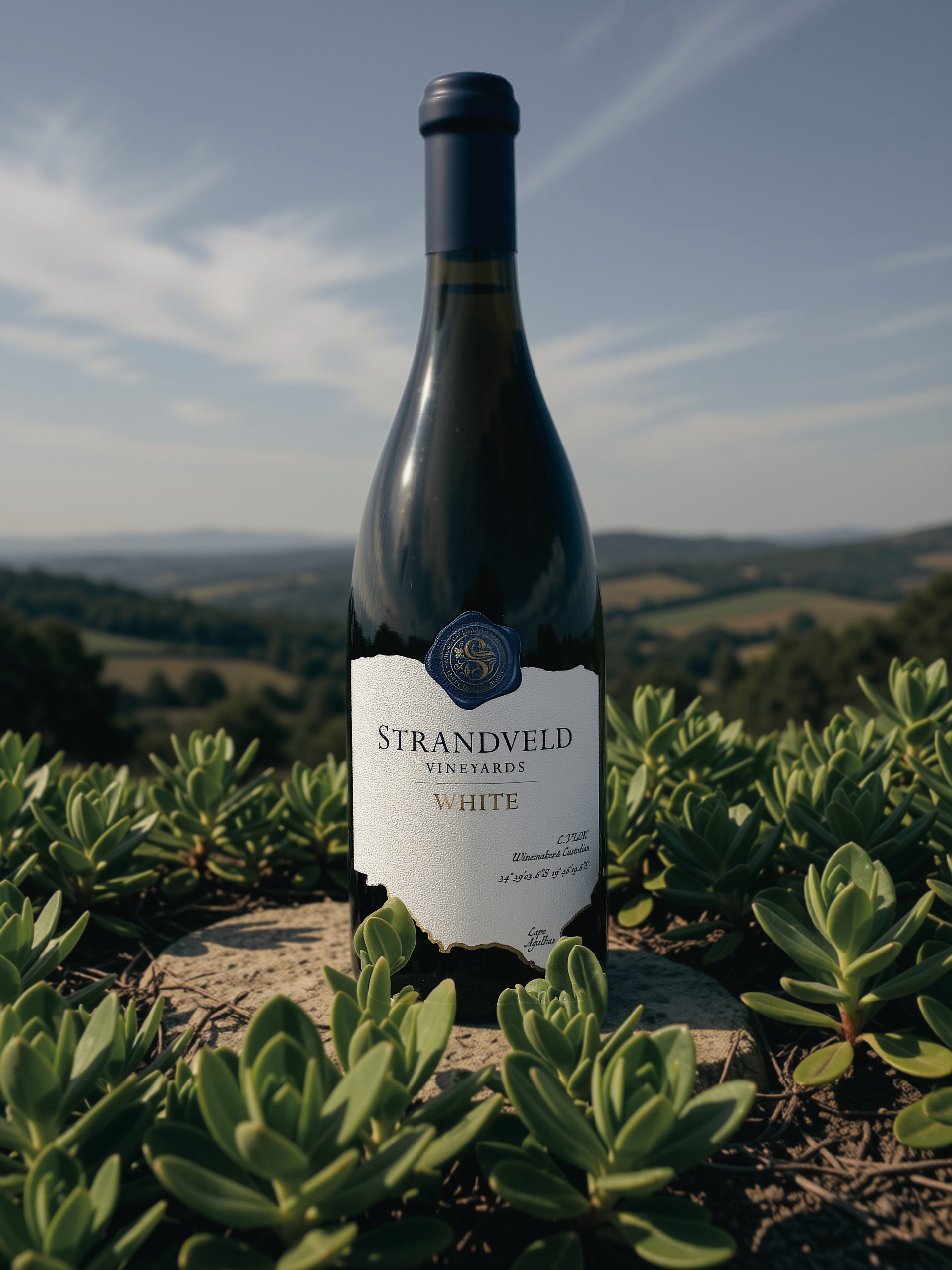
Strandveld White, labelled Fumé Blanc, is 100% Sauvignon Blanc from a single block planted in 2003. It sits on a cool, south-east-facing slope surrounded by indigenous Elim fynbos. The vines grow in yellow, iron-rich gravel, and the rows run east to west to limit wind damage while allowing the summer breezes through. According to the estate, the block averages just two and a half tonnes of grapes per hectare, with six to eight bunches on a vine. That’s a detail I can picture far more easily than a figure on a technical sheet: you could count a vine’s crop on your fingers.
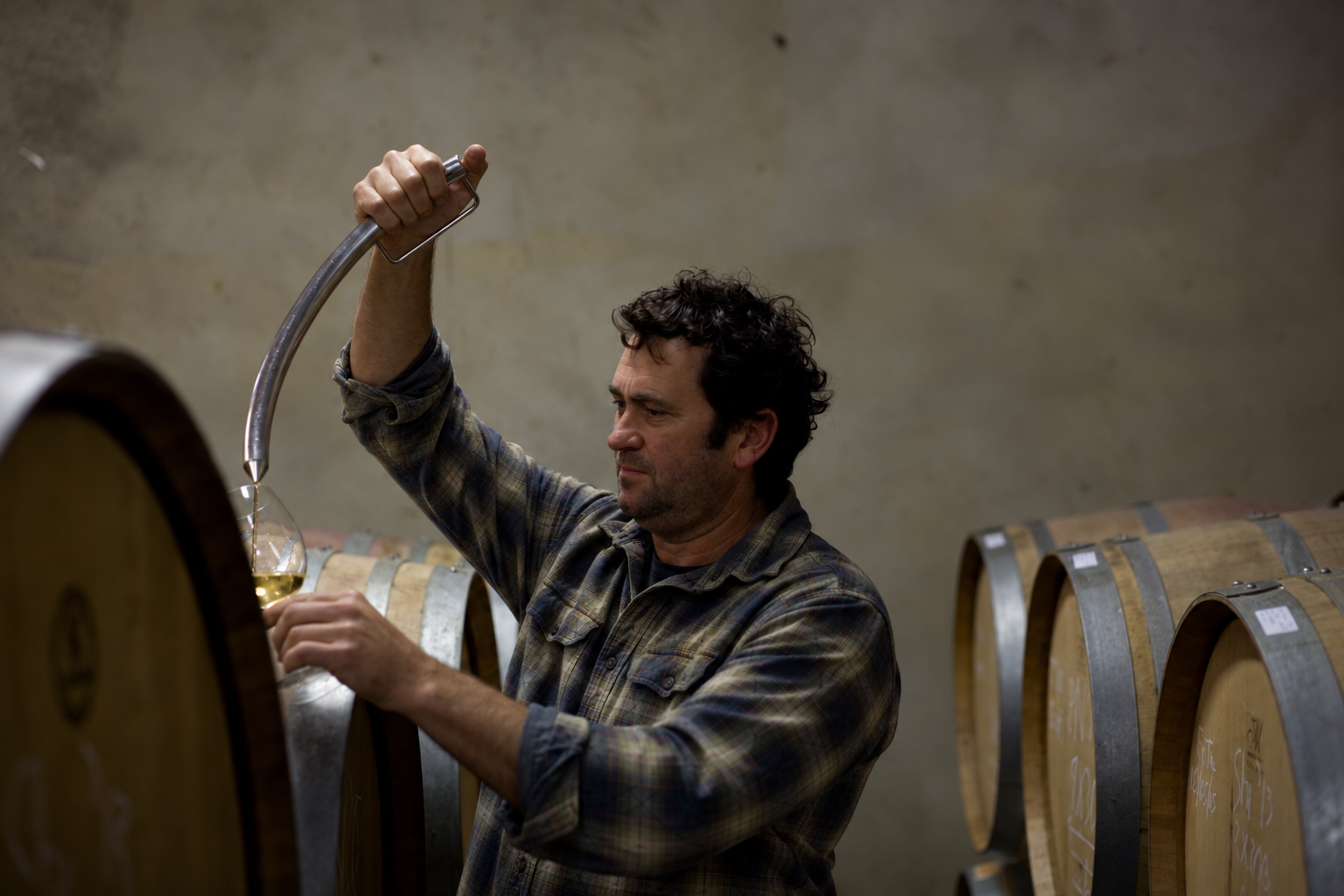
Conrad Vlok was Strandveld’s first winemaker. The cellar method gives the fruit time at nearly every turn. The handpicked grapes are chilled overnight, then crushed and left in contact with their skins for 18 hours before gentle pressing. Fermentation starts in stainless steel and finishes in French oak. The wine then spends a total of 11 months in barrel on its lees, the sediment left after fermentation, with occasional gentle stirring to build texture. That last detail matters: the barrel is part of how the wine feels in the mouth as much as how it smells.
Two vintages from one vineyard
The 2023 had a relatively calm spring and good flowering, followed by rain that kept the vineyard team busy managing the risk of downy mildew. Cool February conditions allowed the Sauvignon Blanc to ripen slowly. Strandveld’s tasting notes describe honeysuckle and toasted brioche, with dried apple, a little blackcurrant and touches of toffee and vanilla. There’s freshness through the finish, which is what makes those richer notes sound so appealing. I’d put this one alongside roast chicken with mushrooms and make sure there was enough bread for the pan juices.
The 2024 had a rougher time at flowering, with strong winds and storms. Early February rain cooled the soil and encouraged a touch of botrytis, which the estate considers welcome in this particular style. Strandveld describes a silkier wine with ripe citrus, apricot and a hint of red fruit. The note that caught my attention was kumquat marmalade: it suggests something riper and more interesting than a simple squeeze of lemon. The estate also describes a mineral edge and a fresh finish. This is the one I’d want with grilled yellowtail, especially if there were a little browned butter on the plate.
If I could get both bottles on the same table, I’d pour them side by side before serving supper. The 2023 sounds more savoury and toasty, the 2024 more vivid in its fruit. They come from the same vineyard and follow the same cellar method, but the estate’s notes give each a distinct character. That’s why I’m looking forward to the launch of the 2025 Strandveld White on Saturday, 28 November 2026. The programme includes a tasting with Conrad Vlok followed by a lunch with paired wines, from 11:00 to 14:00. I’m curious to see what a third season brings to that same patch of ground.
Visit Strandveld Vineyards
Address: Blomfontein Farm, Die Damme Road, near Elim, Bredasdorp, 7280, Western Cape
GPS: 34° 39.592′ S, 19° 47.268′ E · Directions
Phone: +27 28 482 1902
Email: info@strandveld.co.za · tastingroom@strandveld.co.za
Tasting room: Monday to Friday, 09:00–16:00; Saturday, 10:00–15:00. Closed on Sundays and selected public holidays. The estate lists tastings at R120 per person. Hours and bookings
Website: strandveld.co.za